

Operating ModelsFirm profile / interviewOperating Models
Bracket Legal Is Changing Everything About Law Firms Except Who Gets the Money
Founders House’s lawyers have removed offices, job titles and the time required to do the work. The profit distribution remains reassuringly familiar.
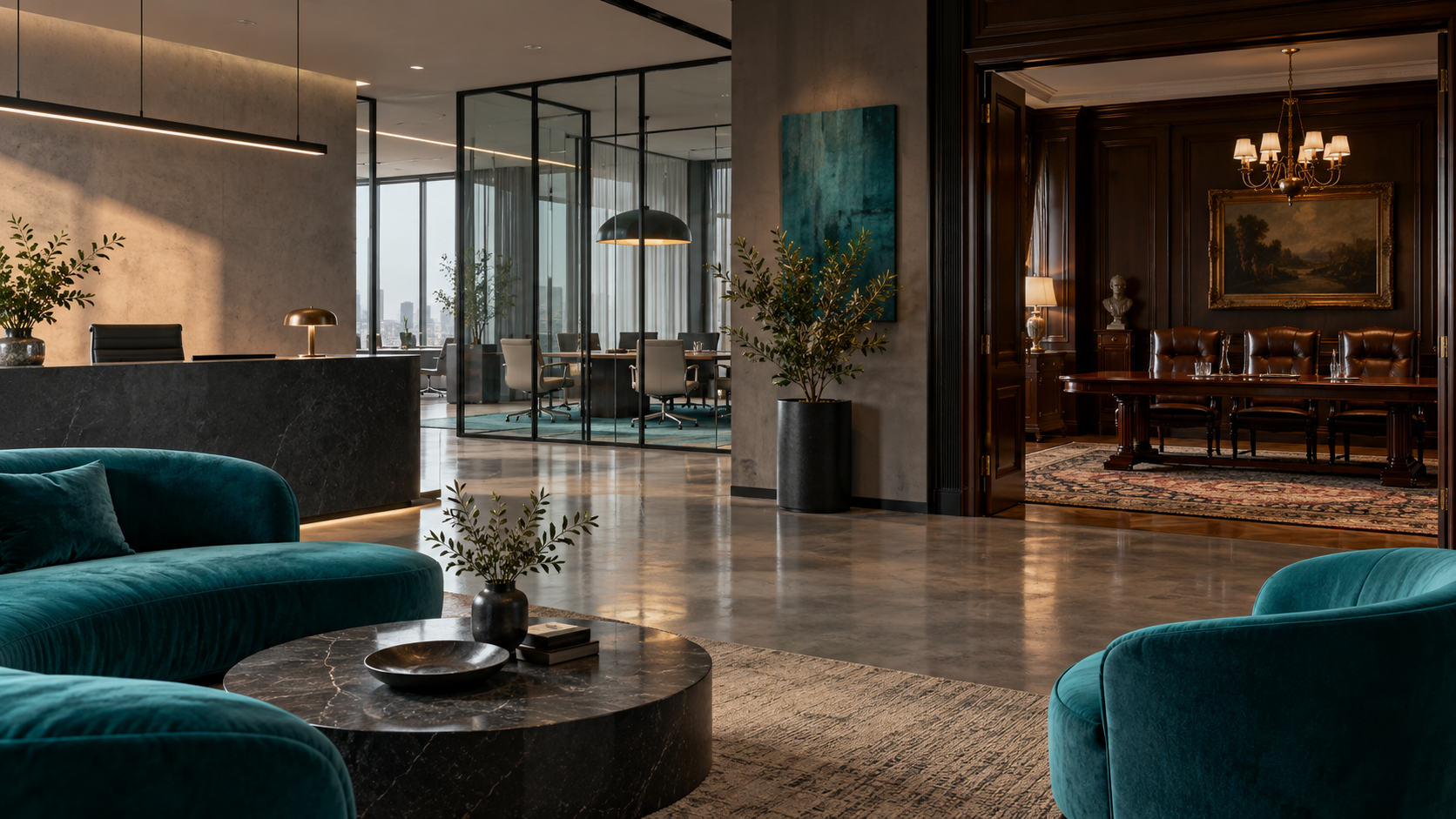
Bracket Legal has no partners, according to its website. It has founding members, equity principals and a small group of people entitled to the money left after everyone else has been paid.
‘The old model creates unnecessary hierarchy,’ its founder tells me, taking the only chair with arms.
Bracket is representing Founders House in its dispute with the List Group over exclusive rights to a proposed £800 million American club expansion. Its opponent, Strake Pell, favours discretion, traditional case management and charging for the people involved. Bracket favours transparent workflows, automated delivery and charging for the outcome it expects those people to produce.
The distinction is visible everywhere. There are no corner offices. The founders occupy a bookable collaboration suite which has been booked through next year. Associates are called legal builders. The receptionist has become the first-impressions lead, without a change in salary.
What does the client gain from your model?
‘Clarity. Every workstream has an owner, a fixed scope and a visible price.’
And if technology lets you complete it much faster?
‘That demonstrates the value of choosing Bracket.’
Does the price fall?
‘You’re thinking in hours. We encourage clients to move beyond that.’
A screen in the open workspace displays the Founders House project plan. Documents move between columns with enviable speed. A separate screen displays the utilisation of the people moving them. That figure is still measured in hours.
What happens to the time the builders save?
‘They gain capacity for higher-value work.’
Do they share in the additional value?
‘Everyone receives a quarterly impact statement.’
The statement records contributions to efficiency, collaboration and firm culture. I ask to see how these translate into remuneration. The founder shows me the section explaining how the statement works.
Bracket’s compensation committee has been replaced by an ownership circle. The circle comprises the same people who would sit on a compensation committee, but meets standing up.
One builder says the firm really does remove pointless work. She can find documents, identify the decision-maker and discover the budget without asking six people. She would like some of the resulting margin to recognise the person who designed the workflow. Her proposal is in the innovation channel, where three founders have reacted with a rocket.
Is ownership itself open to redesign?
‘Absolutely,’ the founder says. ‘We challenge every assumption.’
He asks whether that question can be kept out of the profile. Bracket’s employees are about to receive a presentation on the benefits of thinking like owners.
Something worth not billing for.
Get The Unbillable every week.
Related stories

Profile
The Partner Interview
Managing-partner profile
Regional Managing Partner Will Now Accept Advice Only From Man Who Does Not Exist
At Wetherby Dodd, strategic wisdom now arrives in a navy quarter-zip from a system trained on the managing partner's own speeches.
By Martin Pavey29 Oct 2026 · 2 min read

Dispatches from Operations · Case study / leaked group chat
Law Firm’s Secure Portal Learns About Merger from the Press
Hargreaves Crake's deal platform prevented every unauthorised access and almost every authorised one.
By Beatrice Vale21 Oct 2026 · 2 min read

Q&A
The Partner Interview
Managing-partner interview
Managing Partner Says Firm Already Working in 2036; Questions About Today Declared Historical
Sir Giles Pemberton explains why the future of Pemberton Rook has no place for its present obligations.
By Martin Pavey15 Oct 2026 · 4 min read